
Challenge
I was the first user researcher in my organization to introduce the value behind user research. The Research team at Postmedia has scaled significantly in the last year. With 4 members and growing, we have more power to champion user’s voice through product development cycle. My goal is to set up a robust system that all user researchers/designers/ product managers could understand how the research works. The major challenge are with recruitment and socializing the research insights.
Process
Review existing data - horizon scan
Ethnographic interviews
Synthesis
My Role
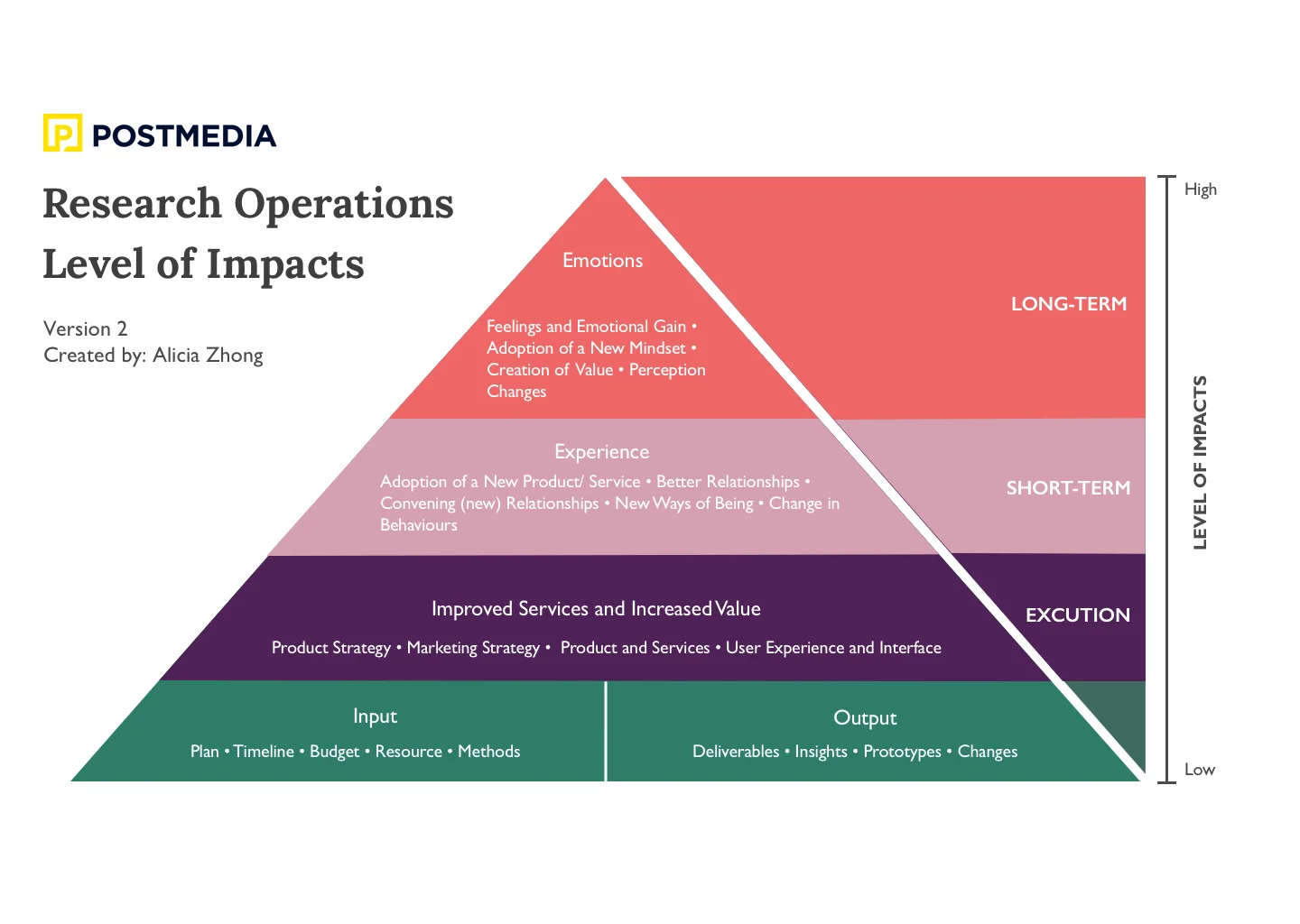
but first, what is Research Ops?
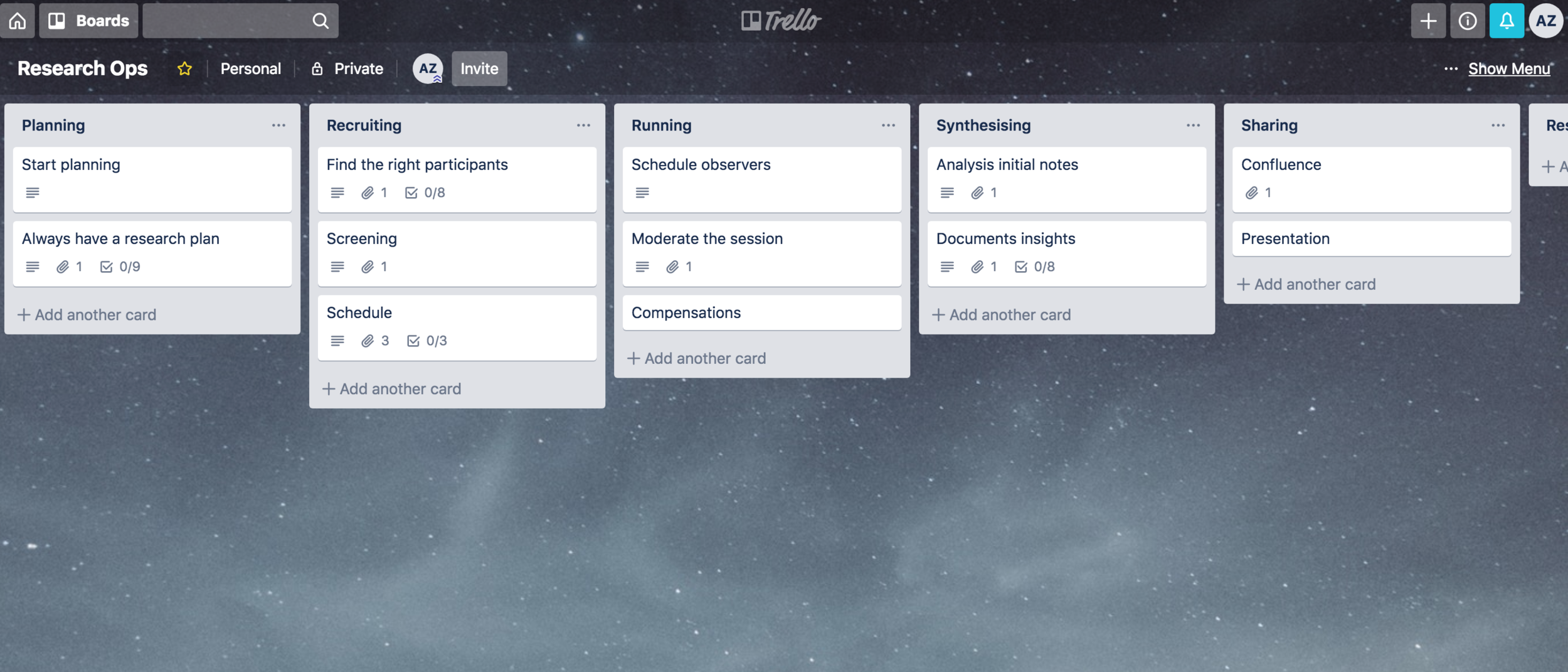
ResearchOps is the mechanisms and strategies that set user research in motion. It provides the roles, tools, and processes needed to support researchers in delivering and scaling the impact of the craft across an organization.
Research Ops is a collective term for addressing challenges such as:
growing and evolving UX research teams
finding and hiring people with the right skills
creating efficient research workflows
improving the quality and impact of research outputs.
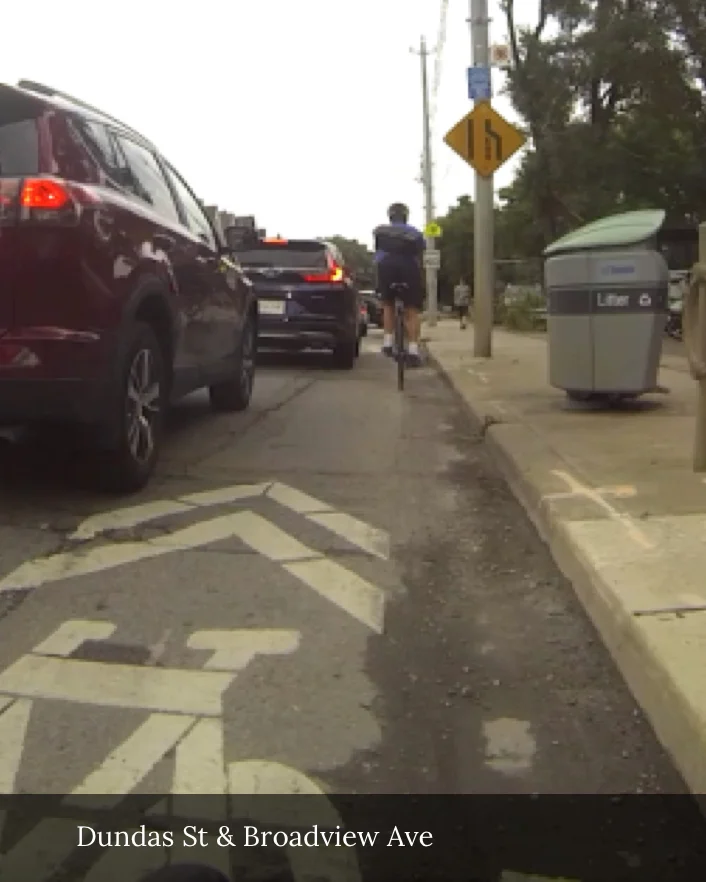
↑ I duct taped a Go-Pro camera to my bike in order to capture participants’ experiences.
Findings
The overarching theme: Cyclists feel that the system we have in place won’t keep them safe.
Insights 1: Despite designated bike lanes, cyclists still feel at risk.
Cars disregard bike lanes when
Cars stop unexpectedly
Passengers open doors without checking
Leave very little room for cyclists
“You cannot be safe enough. You never know what’s going to happen. Most of the time it’s not the cyclists’ fault.”
Insights 2: Unexpectedly, drivers are also a vulnerable demographic.
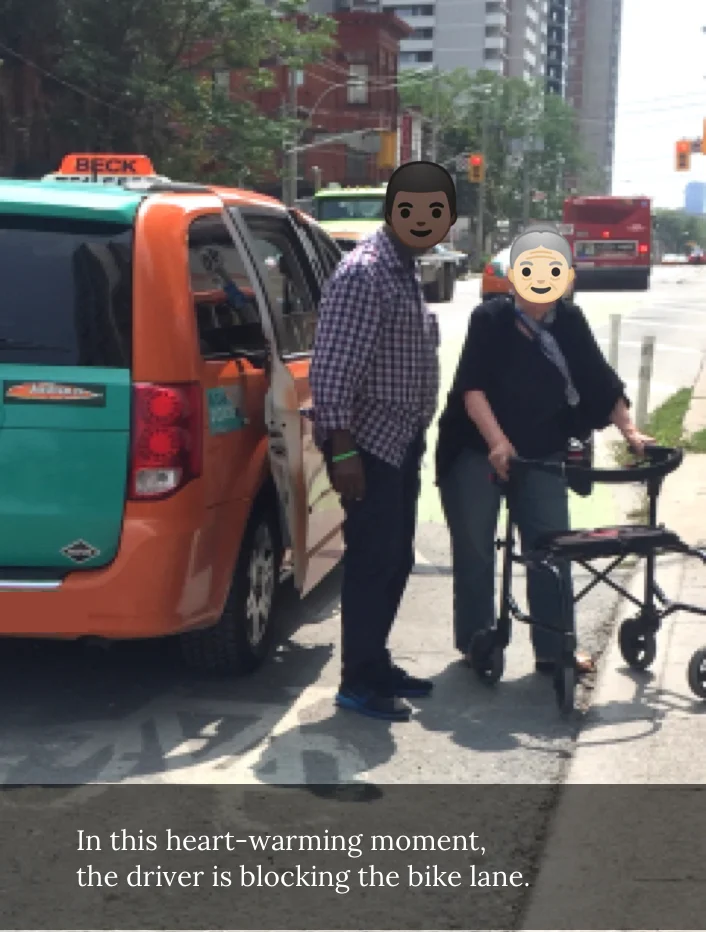
Through my field research, I found there are occasions when drivers don’t have other choices but to block the bike lane.
→ Photo to the right: on Bloor St. & Sherbourne St. there are few clinics frequented by people with accessibility needs. However next to the sidewalk there is no parking nor driveway. In the photo, a senior needs the cab driver’s help with her wheel walker, also to ensure she gets on the sidewalk safely. The most accessible way is to park out front, in the middle of the bike lane.
Designing the infrastructure based on quantitative data lacks a humanistic perspective to understand how and why these problems exist.
Insights 3: Cyclists feel that they don’t need to report an accident if they are not severely injured. The City is lacking critical data (reports).
5 out of 8 cyclists we talked to feel that they don’t need to report a bike accident. These minor incidents have the potential to become a matter of life and death.
One of the participants said:
“I’m fine if they pay up to fix the bike, I was fine. If I’ve been hurt, it would be different. I had a few scratches and road rashes.”
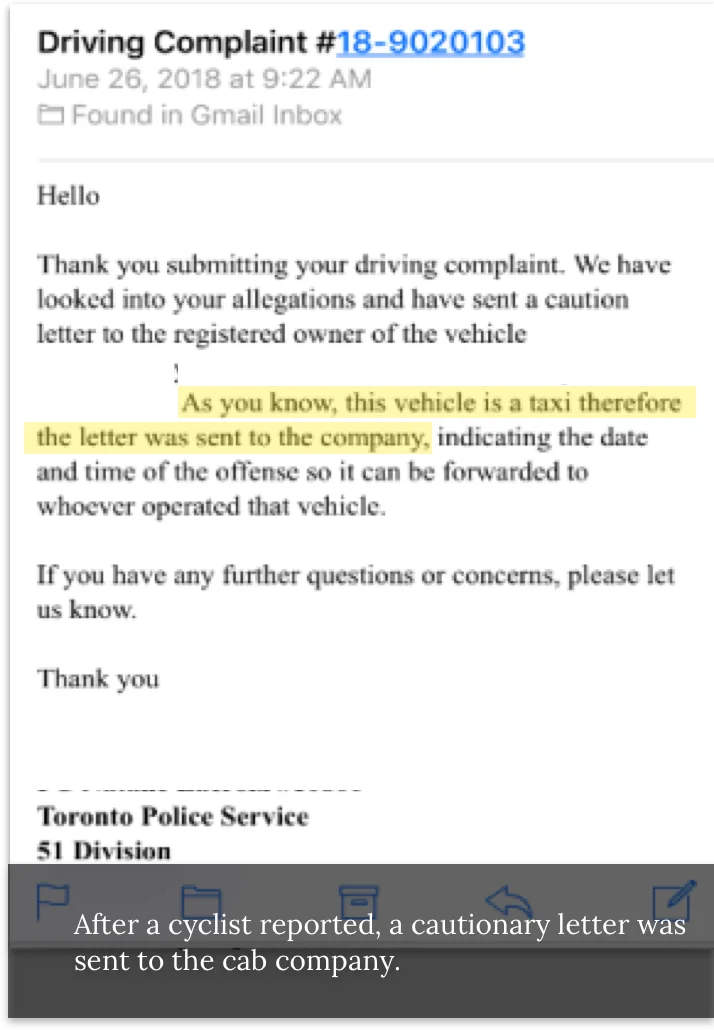
However when cyclist file a complaint, they feel their voices are not being heard.
→ The response of this letter one of our participant provided: it showed us that we need a better system in place to hold both cars and cyclists accountable for their own safety.
Recommended Next Steps
Toronto should be a bike-friendly city where cyclists always feel safe.
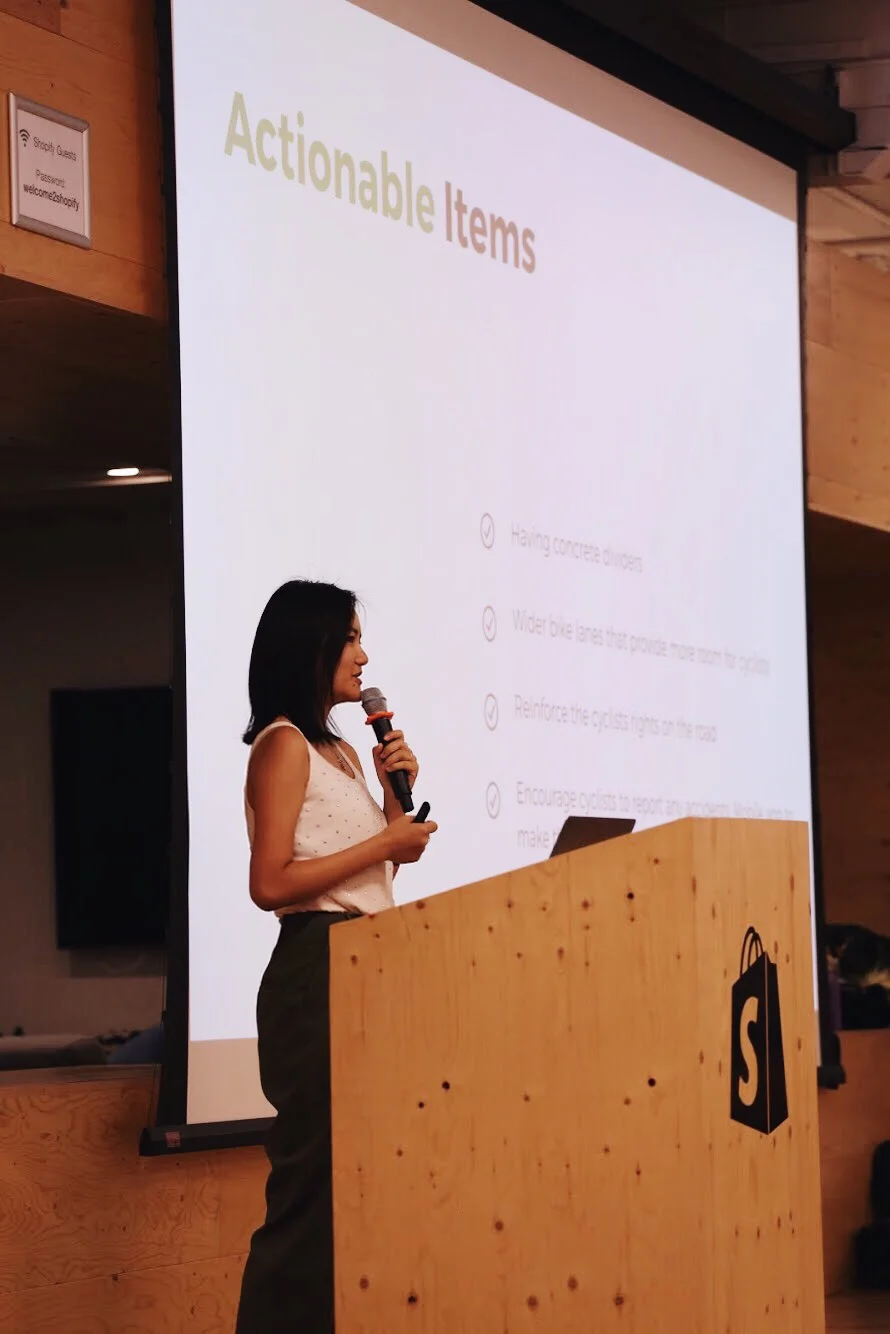
Here are some ideas from the cyclists and our interpretations:
Having concrete dividers that prevent cars from going into the bike lanes.
Wider bike lanes that provide more room for cyclists
Reinforce the cyclists' rights on the road
Encourage minor incidents reports to generate more data points
Design simple digital reporting tool for cyclists for easy access and reporting

My reflections
This project is the most meaningful project I have worked on. I’m a cyclist who has been riding bikes in Toronto for the past 3 years. From my personal experience, I’m always anxious when I’m riding bikes in Toronto.
The first thing I learned is checking my lenses and biases before each research. I jotted down my own biases and reviewed them before every research. By outlining my coloured lenses, I’m aware of the assumptions I have and be as objective as I can, standing in a neutral position and listening to the cyclists’ experiences without interpreting my own perspective.
Special thanks to the Civic Innovation Office and the UX Research Collective class: Tammy, Maggi, Jingjing, Alec, and Stefan - this project would not be possible without your help, thank you!